Residual stress is one of the most common hidden quality issues in medical injection molding. Even when a part looks dimensionally correct, internal stress can cause warpage, sink marks, stress cracking, delamination, or reduced long-term reliability—problems that are especially risky for medical devices.
Medical plastic components such as fluid connectors, diagnostic parts, surgical handles, and drug-delivery components are often made from high-performance resins like PC, COC, PEEK, and ABS. These materials are sensitive to temperature, pressure, and cooling variations. If the molding process is not controlled properly, residual stress can lead to part failure during assembly, sterilization, or end-use.
Reducing residual stress is not just about improving appearance. It is about making sure medical parts remain dimensionally stable, mechanically reliable, and safe over their entire service life.
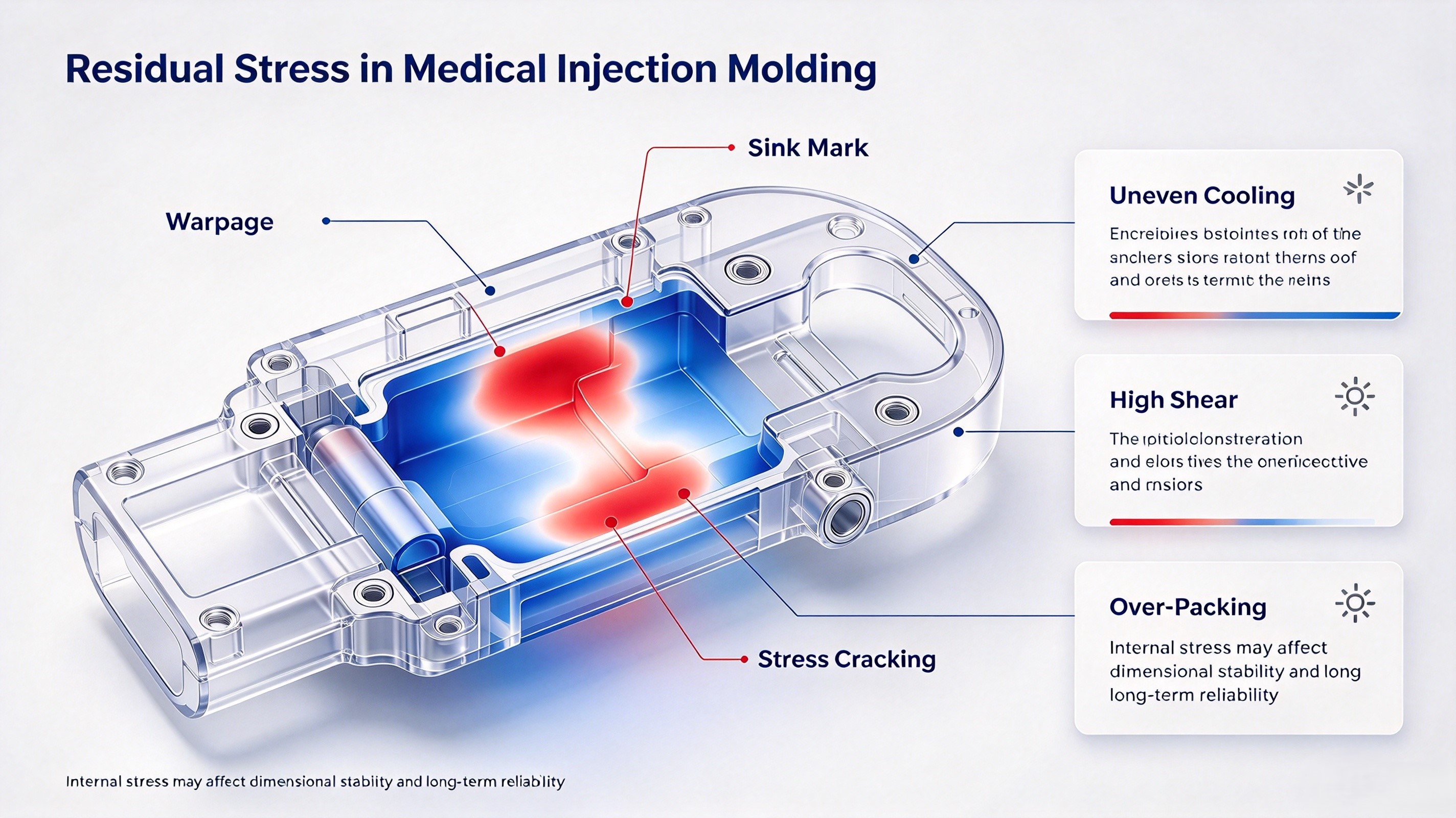
Residual stress usually comes from uneven cooling, excessive shear stress, rapid pressure changes, or poor material flow management. In most cases, it is not caused by a single parameter, but by the combination of:
In medical multi-cavity molds, residual stress can also vary from cavity to cavity. That is why process optimization must be based on actual cavity data, not just machine settings.
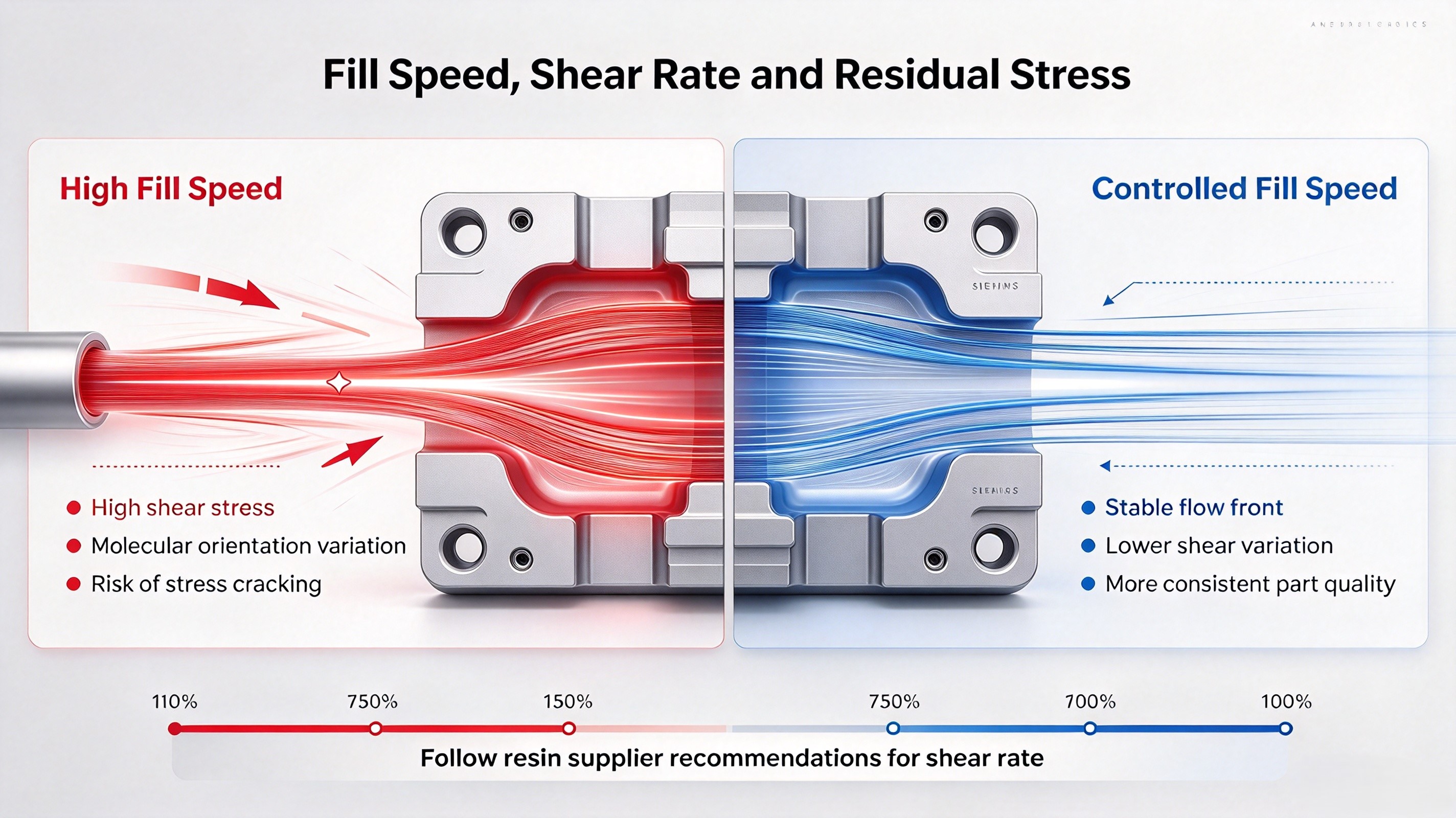
High shear is a major cause of residual stress, especially in high-performance medical resins. When material flows too fast through narrow gates or thin sections, molecular orientation can become uneven, leading to stress build-up.
Recommended actions:
A controlled velocity profile helps reduce stress variation from shot to shot.
Pack and hold pressure has a direct effect on residual stress. If pressure is too high, it can cause over-packing and internal stress. If it is too low, the part may shrink unevenly and create stress in critical areas.
Recommended actions:
The goal is to compress the material gently and consistently, rather than forcing it into the cavity with extreme pressure.
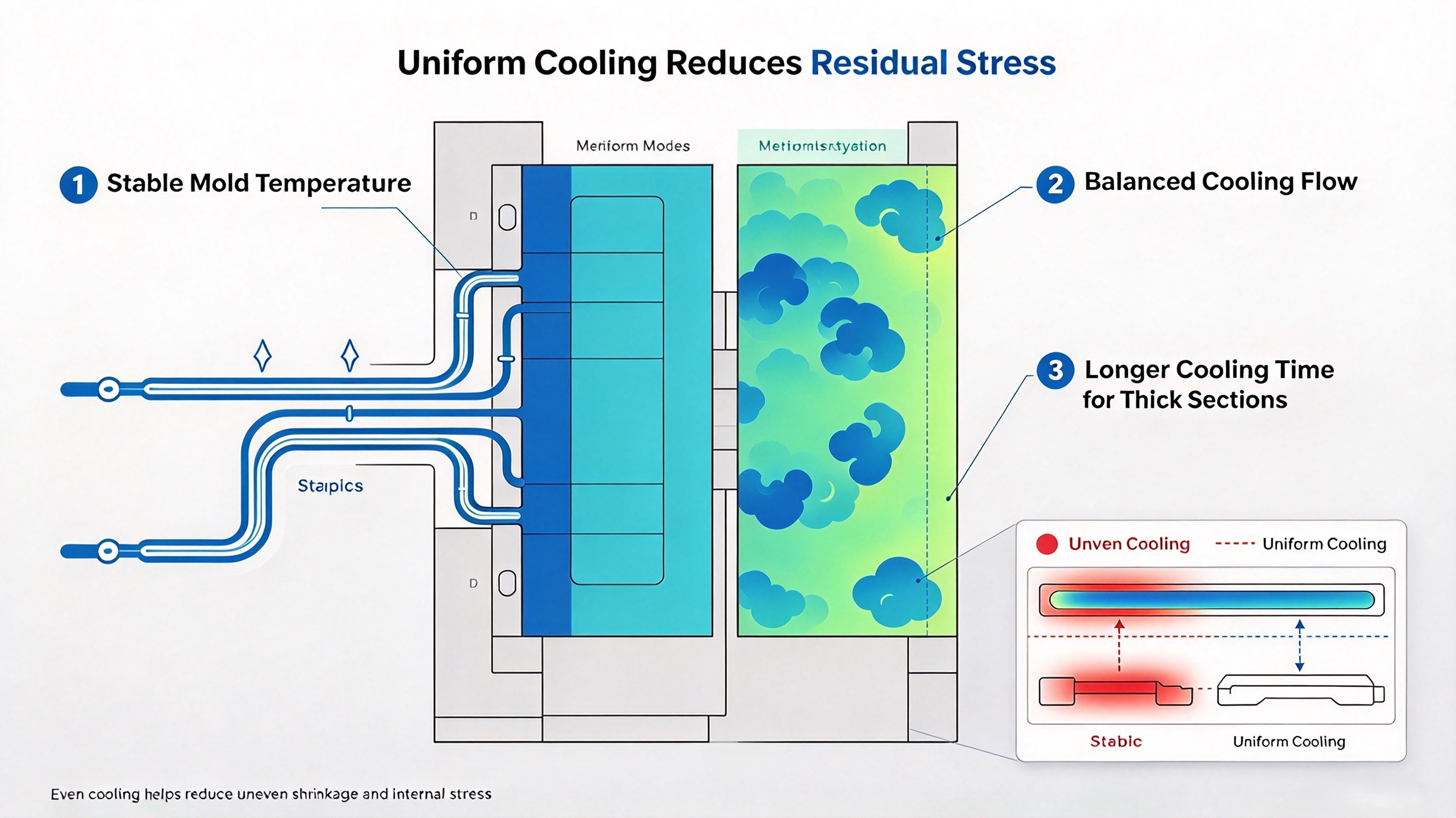
Uneven cooling is one of the most overlooked causes of residual stress. When one side of the part cools faster than the other, the material contracts unevenly, locking in internal stress.
Recommended actions:
For medical parts with strict dimensional requirements, mold temperature consistency is as important as injection pressure.
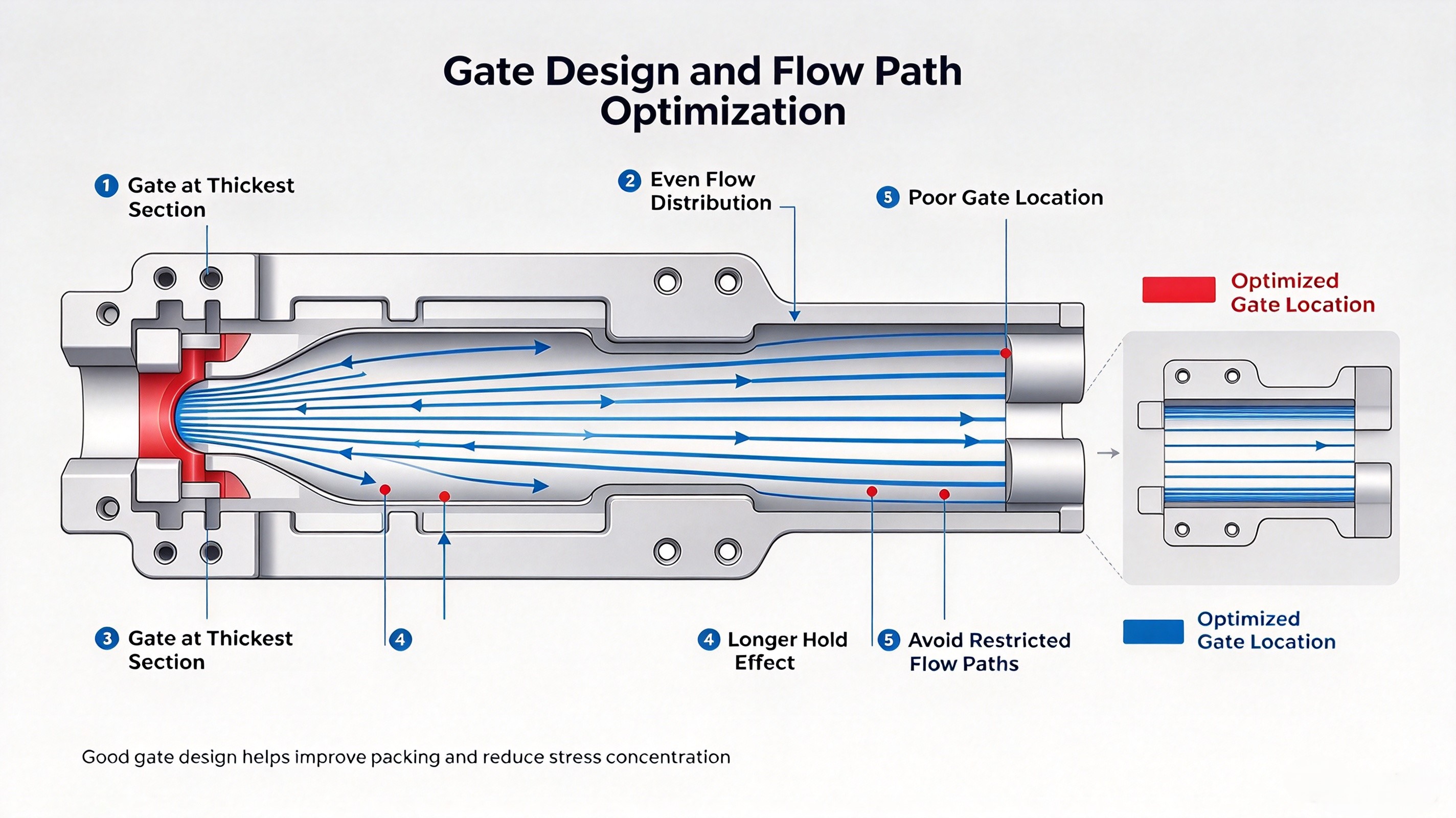
Gate size, gate location, and flow length affect how stress develops inside the part. A small gate or restricted flow path can create high shear, while an inappropriate gate position may cause pressure to concentrate in weak areas.
Recommended actions:
Good gate design reduces stress by helping the material fill and pack more evenly.
Scientific molding is a practical way to reduce residual stress because it focuses on what actually happens inside the cavity, rather than relying on operator experience.
By using cavity sensors and systematic process testing, medical molders can:
This data-driven approach helps prevent stress before it becomes a visible defect.
Common Defects Related to Residual Stress
| Defect | Possible Cause | Correction |
|---|---|---|
| Warpage | Uneven cooling, unbalanced shrinkage | Stabilize mold temperature and cooling time |
| Sink marks | Insufficient pack/hold pressure | Increase hold time or optimize transfer position |
| Stress cracking | High shear, over-packing, chemical exposure | Reduce injection speed and peak pressure |
| Delamination | Poor material flow, excessive shear, contamination | Improve flow path and check material dryness |
| Dimension variation | Process drift, inconsistent fill-to-pack | Validate process window and monitor cavity data |
Medical resins behave differently under stress. For example:
Always review the material supplier’s technical data before setting up the process. Resin type, molecular weight, additives, and moisture content all influence residual stress.
Reducing residual stress in medical molding requires more than a one-time adjustment. It needs a validated process that remains stable during production.
Key steps include:
For medical device manufacturers, this documentation is essential for regulatory compliance and risk management.
Residual stress is a hidden but critical issue in medical injection molding. It can affect part dimensions, mechanical strength, appearance, and long-term reliability. The most effective way to control it is through a systematic, data-driven process that includes controlled fill speed, optimized pack and hold, stable mold temperature, good gate design, and formal process validation.
For medical plastic components, reducing residual stress is not just a quality improvement—it is an essential part of producing safe, reliable, and regulatory-ready parts.
 EN
EN



 Hot News