

With decades mold manufacturing and molding parts, yixun have rich experience and expertise in plastic resin material manufacturing and material application, especially in the medical products material that are sanitizable. In the product development , we can and are happy to propose the material if you want us to give proposal in plastic resin material selection. Below are some often used plastic property. If you need more information, pls feel free to contact us.

Applications: Computer/business machine housings, electrical equipment, garden machinery, automotive dashboards, interiors, wheel covers.
Injection Conditions: Must dry; moisture <0.04%; 90–110°C for 2–4h. Melt 230–300°C; mold 50–100°C; pressure depends on part; high speed.
Properties: Combines ABS processability and PC mechanical/thermal stability; ratio affects heat resistance; good flow; shrinkage ~0.5%.
Applications: Refrigerator containers, storage boxes, kitchenware, seals.
Injection Conditions: No drying if properly stored. Melt 220–260°C (large molecules: 200–250°C); mold 50–95°C. <6mm wall: high mold temp; >6mm: low mold temp. Pressure 700–1050bar; high speed. Runner 4–7.5mm; gate ≤0.75mm; suitable for hot runners.
Properties: High crystallinity, density, tensile strength, heat distortion, chemical resistance; better barrier than LDPE; lower impact; classified by density; good flow (MFR 0.1–28); prone to environmental stress cracking; soluble in hydrocarbons >60°C. Shrinkage 1.5–4%.
Applications: Bowls, boxes, pipe connectors.
Injection Conditions: Generally no drying. Melt 180–280°C; mold 20–40°C. Pressure max 1500bar; hold max 750bar; high speed. All runners/gates allowed; excellent for hot runners.
Properties: Density 0.91–0.94g/cm³; gas/moisture permeable; high thermal expansion; resistant to most solvents but swells in aromatics/chlorinated hydrocarbons; prone to environmental stress cracking. Shrinkage 1.5–5%.
Applications: Automotive lights, medical blood containers, CDs, light diffusers, cups, stationery.
Injection Conditions: Hygroscopic; must dry: 90°C for 2–4h. Melt 240–270°C; mold 35–70°C; medium speed.
Properties: 92% light transmission, excellent weather resistance; low birefringence; creep at room temperature; good impact; shrinkage ~0.5%.
Applications: Gears, bearings, valves, pump housings, garden equipment.
Injection Conditions: No drying if dry stored. Homopolymer melt 190–230°C; copolymer 190–210°C; mold 80–105°C. Pressure 700–1200bar; medium–high speed. All gates allowed; tunnel gates short; hot runners recommended.
Properties: Crystalline, rigid, elastic, creep/impact resistant; homopolymer: high elongation/fatigue; copolymer: better heat/chemical stability; low moisture absorption; very high shrinkage 2–3.5%.
Applications: Automotive parts, appliance liners, consumer goods, garden tools.
Injection Conditions: No drying if properly stored. Melt 220–275°C (<275°C); mold 40–80°C (suggest 50°C); pressure max 1800bar; high speed (defects: high temp low speed). Cold runner 4–7mm; gate 1–1.5mm (min 0.7mm); compatible with hot runners.
Properties: Semi-crystalline; stiffer than PE, higher melting point; homopolymer brittle <0°C; copolymer: better impact, HDT ~100°C; Vicat ~150°C; rigid, scratch-resistant; no environmental stress cracking; glass/metal/rubber modifiable; resistant to water/acids/solvents except aromatics/chlorinated hydrocarbons. Shrinkage 1.8–2.5% (0.7% 30% glass-filled).
Applications: Packaging, tableware, trays, transparent containers, light diffusers, insulation films.
Injection Conditions: Generally no drying; if needed: 80°C for 2–3h. Melt 180–280°C (flame-retardant ≤250°C); mold 40–50°C; pressure 200–600bar; high speed. All conventional gates allowed.
Properties: Mostly transparent amorphous; dimensionally stable, optical/electrical properties, low moisture absorption; resistant to water/dilute acids; attacked by conc. sulfuric acid, aromatics, chlorinated hydrocarbons. Shrinkage 0.4–0.7%.
Applications: Water meters, cable jackets, cams, sliding mechanisms, bearings.
Injection Conditions: Moisture <0.1% before processing; exposed: 85°C dry 4–5h; sealed: 3h equilibration. Melt 240–300°C (standard ≤310°C, flame-retardant ≤270°C); mold 30–40°C (unfilled), 80–90°C (thin/large), 90–100°C (reinforced). Pressure max 1000bar; high speed. Runner ~3mm (unfilled), 5–8mm (reinforced); round runners, short gates; pin-point min 0.8mm; hot runner compatible.
Properties: Semi-crystalline; lower melting point/density than PA6/PA66; high moisture regain; good electrical insulation unaffected by humidity; impact/chemical resistant; not resistant to strong oxidizing acids; good flow. Shrinkage 0.5–2%.
Applications:It is widely used in medical devices, aerospace parts, semiconductor components, industrial precision machinery and high-temperature electronic insulation parts for harsh working environments.
Injection Conditions:Melt temperature: 370–395°C; Mold temperature: 160–190°C.Strict vacuum drying at 120–150°C for 3–6 hours is required. High injection pressure and stable cooling cycle are essential to ensure complete crystallization and avoid internal stress.
Properties:is a high-performance thermoplastic with exceptional high-temperature resistance, high mechanical strength, great creep resistance and stable dimensional accuracy. It also owns outstanding chemical resistance, fatigue resistance and good biocompatibility.
Applications: Sockets, housings, kitchenware, automotive parts, tableware, cosmetics packaging.
Injection Conditions: Hygroscopic; dry 80°C for 2–4h. Melt 200–270°C (lower for thick walls); mold 40–80°C (reinforced ≤60°C); good cooling required. Pressure 350–1300bar; high speed. Proper gate size to avoid streaks/blistering/voids.
Properties: Rigid, transparent; styrene: rigidity/transparency/processability; acrylonitrile: chemical/heat resistance; high load capacity; glass-filled improves rigidity/heat resistance/reduces expansion; Vicat ~110°C; HDT ~100°C; shrinkage 0.3–0.7%.
| Manufacturer (Origin) | Material Grade | Key Characteristics (Concise) | Applicable Plastics / Usage |
| Aubert & Duval (France) | MEK4 | High hardness & toughness, wear-resistant, nitriding capable (800HV) | Molds requiring high hardness, toughness, and wear resistance |
| (France) | X13T6W (236/236H) | High purity mirror steel, better | High-precision mirror molds (PVC, PC, PMMA) |
| ASSAB (Sweden) | 718S / 718H | Pre-hardened, Ni-added, homogeneous | High-polish core/cavity (PA, POM, ABS, PP) |
| (Sweden) | S136 / S136H | High purity mirror, strong acid resistance, anti-rust | Corrosion-resistant mirror molds (PVC, acidic plastics) |
| Daido (Japan) | PX88 | Low welding crack sensitivity, good weldability | General purpose mold steel |
| (Japan) | NAK55 / NAK80 | Pre-hardened high hardness, good mirror & EDM finish | High-performance plastic molds, rubber molds |
| S-STAR (PAK90) | Corrosion & wear resistant, high mirror finish | Precision plastic molds, high mirror molds | |
| Finkl (USA) | P20HH / P20LQ | High purity, excellent polish ability | Mirror-grade molds (non-acidic plastics) |
| Mitsubishi (Japan) | MUP | Wear-resistant, machinable, EDM suitable | High-quality long-run plastic molds |
| Shinto (Japan) | PM-35 | Porous steel (breathable), solves air traps | Molds with air trap/burn mark issues |
| Wuyang (China) | 2311 / 718 | Pre-hardened | General plastic molds |
| LKM (China) | 738 / 738H | Pre-hardened, uniform hardness, easy machining | High toughness & high-polish molds |
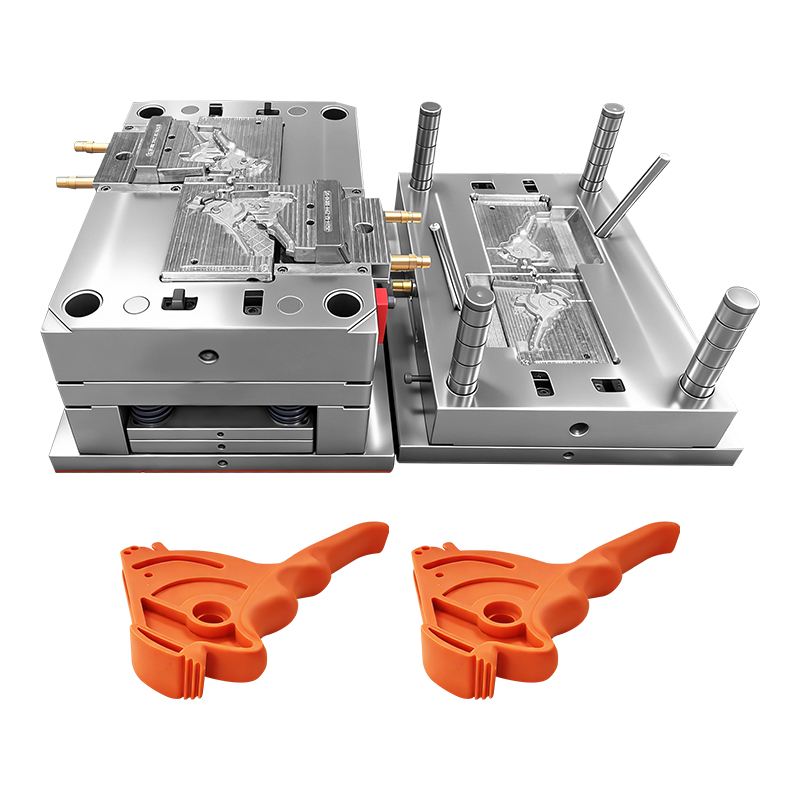
● Applications: Widely used for industrial sliding parts, gears, bearing sleeves and automotive functional components that require long-term friction and maintenance-free operation.
● Injection Conditions: Melt temperature: 270–300°C; mold temperature: 80–120°C. High injection pressure and proper melt temperature are required; wear-resistant screw and hardened molds are necessary due to glass fiber abrasion, with controlled cooling to avoid surface PTFE precipitation.
● Properties: Reinforced with 30% GF and 15% PTFE, it combines high mechanical strength, excellent dimensional stability, low friction and superior self-lubricating wear resistance.
Mold Steel: H13
● Characteristics: High-toughness hot-work steel, impact strength >300 J
● Applicable Plastics / Usage: Glass-filled plastics; Al/Zn die-casting molds
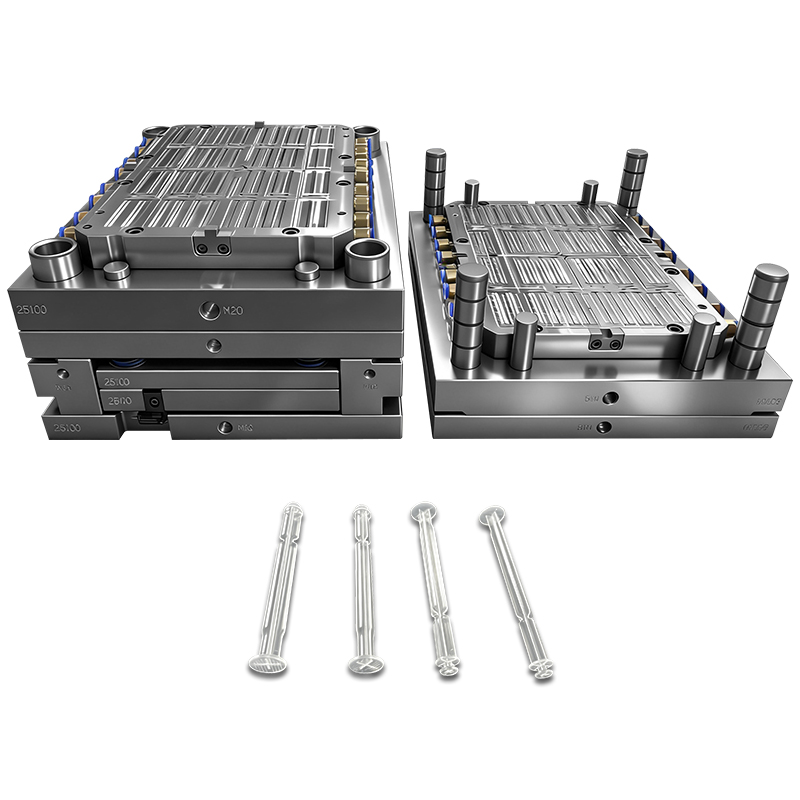
● Applications: Automotive parts, appliance liners, consumer goods, garden tools.
● Injection Conditions: No drying if properly stored. Melt 220–275°C (<275°C); mold 40–80°C (suggest 50°C); pressure max 1800bar; high speed (defects: high temp low speed). Cold runner 4–7mm; gate 1–1.5mm (min 0.7mm); compatible with hot runners.
● Properties: Semi-crystalline; stiffer than PE, higher melting point; homopolymer brittle <0°C; copolymer: better impact, HDT ~100°C; Vicat ~150°C; rigid, scratch-resistant; no environmental stress cracking; glass/metal/rubber modifiable; resistant to water/acids/solvents except aromatics/chlorinated hydrocarbons. Shrinkage 1.8–2.5% (0.7% 30% glass-filled).
Mold Steel: S136
● Characteristics:High purity, high finish, excellent polishability, strong acid resistance; mirror & anti-corrosive, protects cooling channels.
● Applicable Plastics / Usage: PVC,PP, EP, PC, PMMA
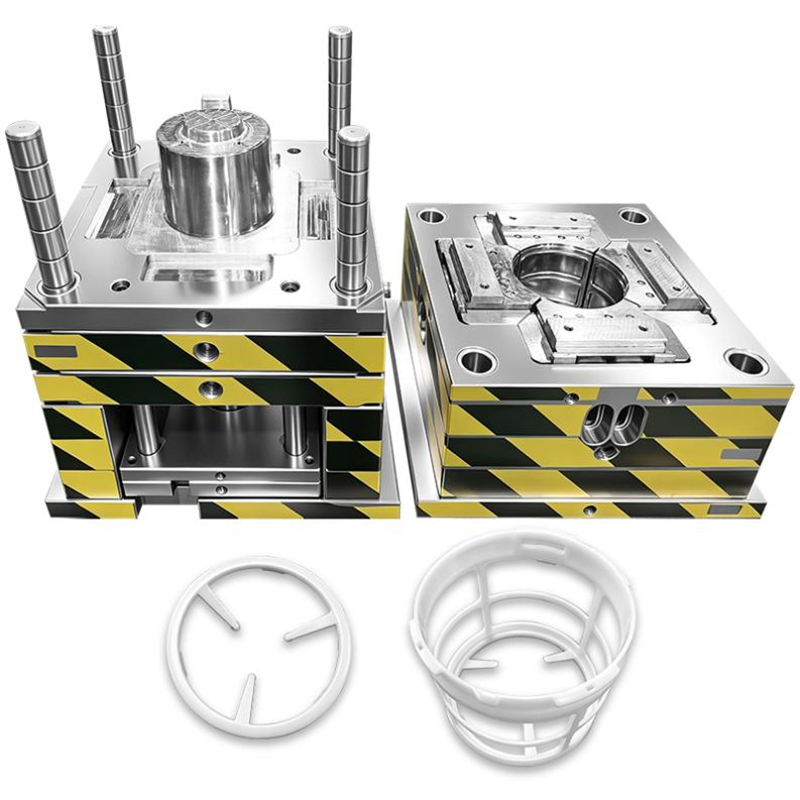
● Applications: Gears, bearings, valves, pump housings, garden equipment.
● Injection Conditions: No drying if dry stored. Homopolymer melt 190–230°C; copolymer 190–210°C; mold 80–105°C. Pressure 700–1200bar; medium–high speed. All gates allowed; tunnel gates short; hot runners recommended.
● Properties: Crystalline, rigid, elastic, creep/impact resistant; homopolymer: high elongation/fatigue; copolymer: better heat/chemical stability; low moisture absorption; very high shrinkage 2–3.5%.
Mold Steel: P20
● Characteristics:High purity, high finish, excellent polishability, strong acid resistance; mirror & anti-corrosive, protects cooling channels.
● Applicable Plastics / Usage: PVC,PP, EP, PC, PMMA
 EN
EN