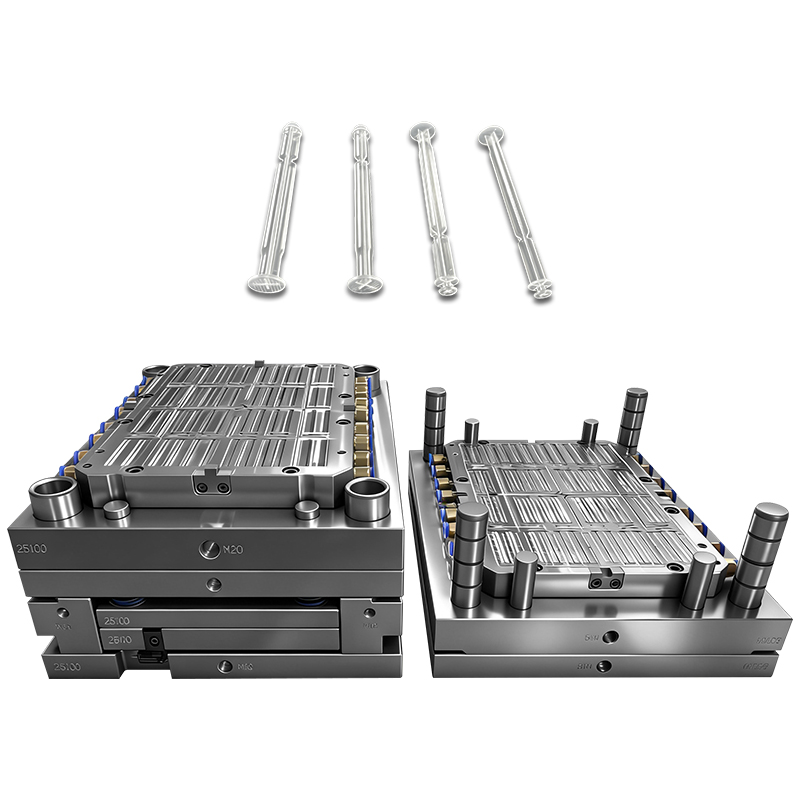
Manufacturing high-volume medical consumables demands a perfect balance of speed, precision, and strict regulatory compliance. Among these components, the medical syringe plunger rod represents a classic engineering challenge.
When you scale production to a 48-cavity injection mold, the complexity multiplies exponentially. Producing a slender, crystal-clear plastic moulded part under medical cleanroom constraints introduces a triple constraint: long/slender product geometry, medical hygiene standards, and long-term mass production stability.
To achieve successful, high-efficiency medical device molding, engineers must overcome significant manufacturing bottlenecks across seven critical design and production dimensions.
|
|
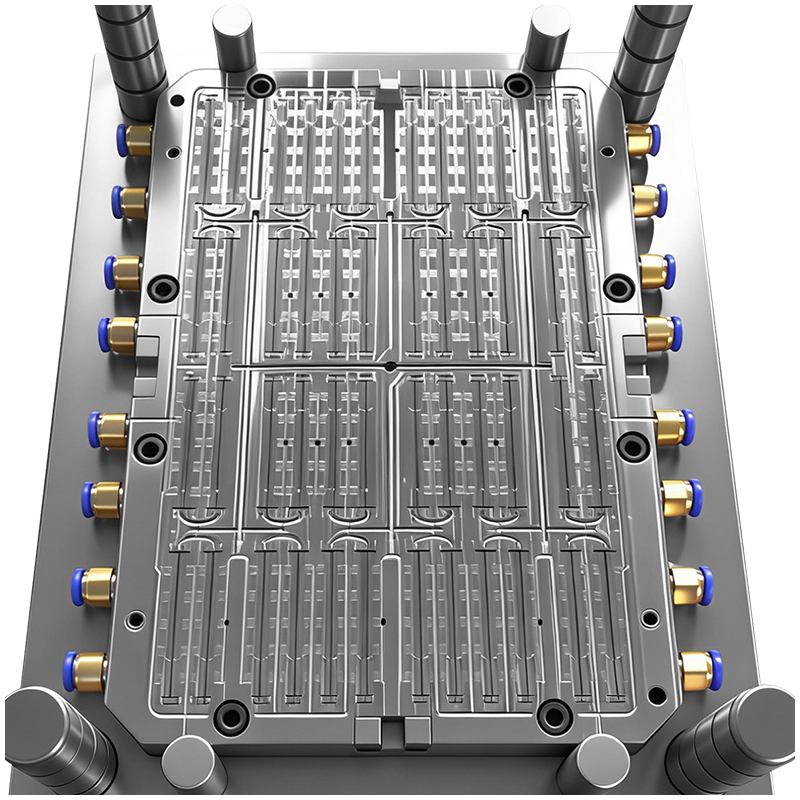
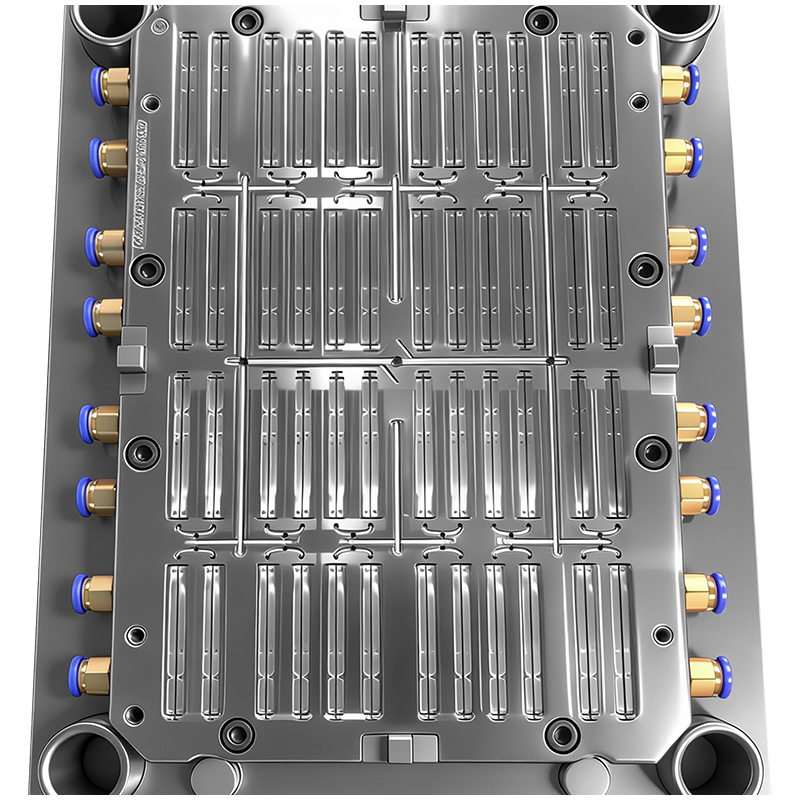
In high-cavity injection moulding, melt flow balance is the ultimate defining factor for part consistency. A 48-cavity layout requires complex, multi-level runner branching.
Geometrical vs. Rheological Balance: Simply making the runner paths geometrically identical is not enough. Variations in shear rates cause temperature differences and pressure drops within the melt. For a thin-walled, slender syringe plunger, even a slight imbalance leads to short shots, dimensional deviations, or weight variances. Because medical quality assurance has zero tolerance for defects, minor filling inconsistencies will cause visible knit lines, warpage, or micro-bubbles, resulting in immediate part rejection.
Hot Runner Precision: A 48-cavity system relies on a multi-drop hot runner setup. The temperature of each nozzle, gate diameter, and valve pin alignment must be completely uniform. A temperature variance greater than 2°C between nozzles will cause uneven volumetric shrinkage. Furthermore, the micro-point gates require a machining tolerance within ±0.003mm to ensure flash-free, automatic degating, preventing loose burrs from contaminating medical fluids.
Advanced CAE Simulation: Engineers must run extensive filling, cooling, and warpage simulations to optimize runner diameters and smooth out corners before cutting steel, making the design phase significantly longer than a standard 8- or 16-cavity mold.
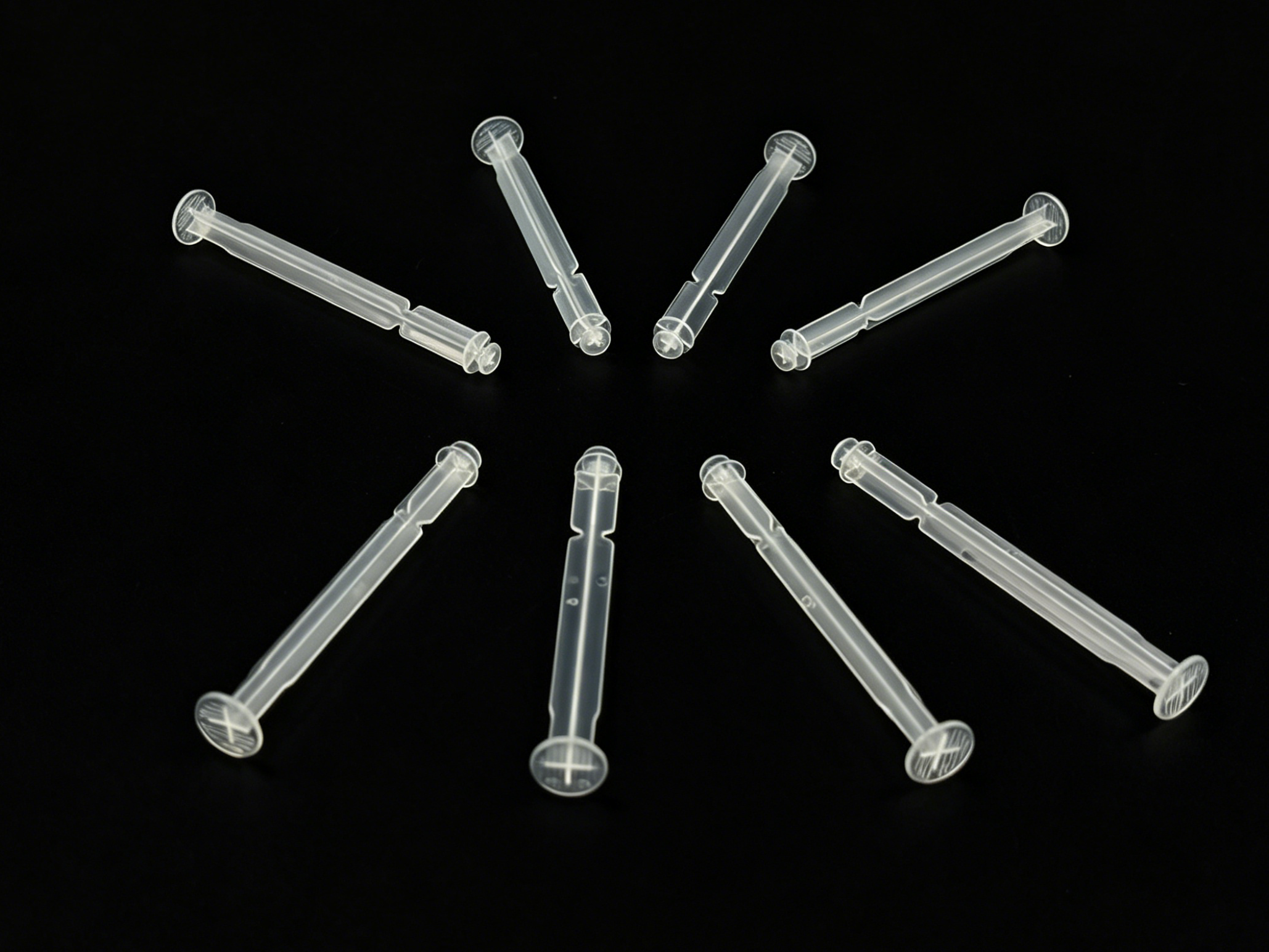
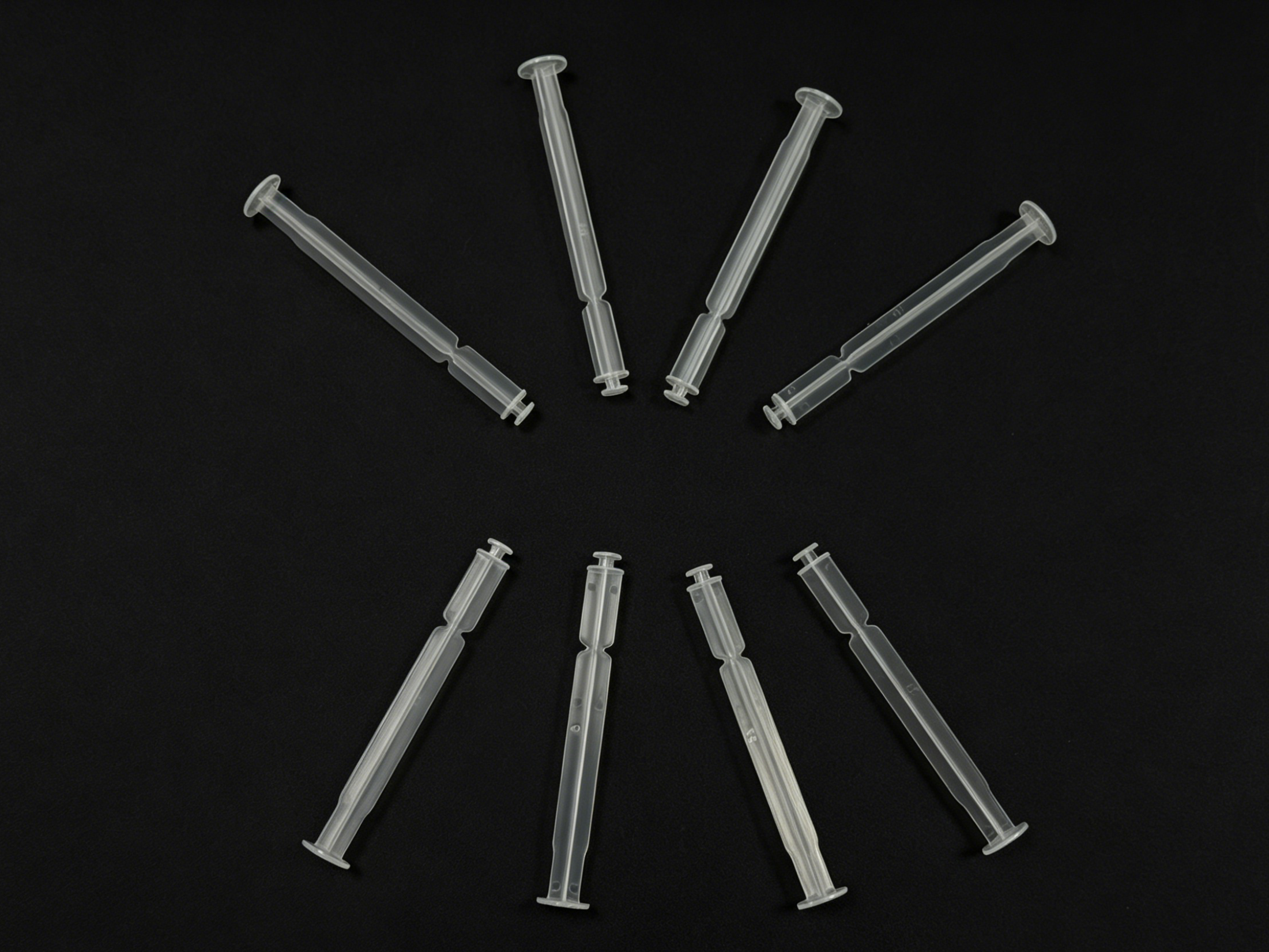
A standard syringe plunger integrates a long, thin rod with a flat thumb-rest disc at the end. With a single-cavity core length often exceeding 100mm, managing the structural rigidity of the plastic mould tooling is a major obstacle.
Preventing Core Deflection: Slender cores are highly susceptible to chattering during CNC milling, EDM, and wire-cutting processes, which ruins straightness and roundness. To ensure smooth plunger movement and avoid syringe jamming, the concentricity between the disc head and the rod body on all 48 cores must be held within ≤0.01mm.
Micron-Level Insert Positioning: The installation pocket positions for the 48 cavity inserts on the mold plates must maintain a tolerance of ±0.005mm. Any microscopic misalignment shifts the parting line, resulting in uneven wall thickness and subsequent asymmetric thermal shrinkage that bends the plunger.
Strict Parting Line Flatness: Large-area plates holding 48 cavities easily warp under residual stress from heat treatment and heavy machining. The flatness of the parting line must be held within ≤0.002mm/m, and the closing gap must be less than 0.01mm to eliminate any flash that could shave off rubber gaskets or introduce particles into the medication.
High-efficiency precision molding depends entirely on how quickly and evenly heat is removed from the system.
Dual-Circuit Symmetrical Cooling: Because a 48-cavity layout is packed tightly together, the center cavities naturally retain more heat than the outer edges. Every slender core must feature a deep-drilled, direct-cooling bubbler or fountain circuit. The cooling lines on the moving and fixed sides must mirror each other precisely in length and diameter to keep the overall mold temperature variance within ±2°C. Localized hot spots will cause part length variations, sink marks at the disc head, and reduced material clarity.
Leak and Rust Prevention: For long-term clean room plastic making, the mold base and inserts utilize corrosion-resistant S136H stainless steel. Water line seals must be 100% leak-proof. Any water seepage creates rust, leading to black-spot contamination on the transparent polypropylene (PP) or cyclic olefin copolymer (COC) parts.
Medical plungers require pristine transparency and must be completely free of black spots or material degradation. The tool's surface directly dictates the aesthetic and hygienic properties of the molded product.
Deep-Cavity Polish Challenges: Polishing the tight, narrow internal walls of 48 deep cavity inserts is exceptionally labor-intensive. Technicians must hand-polish every component to a mirror finish of Ra≤0.05μm. This eliminates machining marks where plastic might stick or degrade during downtime, ensuring the tool complies with strict medical GMP standards.
Consistency and Clean Design: Hand-polishing 48 identical sets requires masterful consistency; uneven pressure alters the surface gloss and micro-shrinkage behaviors. The overall precision mold design must feature zero dead corners or sharp undercuts where material could stagnate, burn, and flake off into the production line.
Because syringe plungers have large surface areas in contact with the cores, the transparent medical resins often create a vacuum, making them prone to sticking, stress-whitening, or cracking during ejection.
Millisecond-Level Synchronized Ejection: Ejector pins must be placed perfectly straight beneath the plunger head. The machining concentricity of the ejector pin holes must be within ≤0.005mm. The entire ejector plate must move with millisecond-level synchronization so that uneven forces do not bend the flexible, thin-walled rods.
Vacuum-Breaking Vent Design: Micro-venting slots measuring between 0.012mm and 0.015mm are strategically ground into the cores to break the vacuum during release without generating flash. The draft angles must be tightly controlled—too small and the part scratches; too large and it violates the tight dimensional footprint required for automatic assembly.
High-Speed Automation Integration: A high-output clean room molding process counts on robotic pick-and-place systems. A tiny variation in the ejection stroke can cause a robot to miss a part, leading to tool damage or scratched components.
Running high-speed cycles around the clock to produce millions of parts per year puts massive mechanical strain on the tool steel.
Managing Material Distortion: Premium grades like S136 or STAVAX are through-hardened to HRC48–52. However, large plates with 48 pocket cutouts easily warp during heat treatment. Correcting this requires complex stress-relieving and cryogenic deep-freezing stabilization cycles to prevent the entire plate from being scrapped.
Wear Resistance & Interchangability: High-frequency friction on 48 delicate core pins causes rapid wear. Cores must undergo specialized mirror-polishing followed by nitriding treatments to boost surface hardness and corrosion resistance against aggressive medical resins. Crucially, the tool must feature a modular design where all 48 inserts are completely interchangeable for rapid field maintenance.
Preventing Mold Base Flex: Under intense clamping forces, large mold bases can experience micro-flexing, throwing off cavity concentricity. The design must feature a thickened mold frame, heavy-duty interlocking taper locks on all four sides, and dual guiding pillars to keep the assembly perfectly rigid.
The final milestone for any specialized healthcare molding asset is satisfying strict quality tracking and regulatory validation protocols.
Micro-Assembly: Final assembly must take place in a temperature-controlled cleanroom workshop. Once the fixed and moving halves close, individual cavity axial alignment is inspected via a Coordinate Measuring Machine (CMM). An offset greater than 0.008mm in a single cavity disqualifies the entire block, making the assembly phase 2 to 3 times longer than a standard commercial tool.
Extensive Data Documentation: Quality control teams use CMMs, roundness testers, and profilometers to log precise measurements for every single core, insert, gate, and ejector pin. This mountain of inspection data forms the foundational validation paperwork required for medical device tracking.
Zero Contamination Materials: To be certified for producing oem medical products, no part of the mold interacting with the plastic may contain heavy metals like copper or lead. All steel treatments, polishing compounds, and moving-part lubricants must be backed by official biocompatibility and non-toxic certification reports, ensuring the final asset integrates seamlessly into an automated, medical-grade manufacturing environment.
 EN
EN



 Hot News