In manufacturing, plastic injection molding is a cornerstone technology. However, a common misconception is that a mold is just a mold, regardless of what it produces. In reality, the line dividing Medical Device Molds from Regular Industrial Molds is massive.
While an industrial mold might focus purely on cost-efficiency and part volume, a medical device mold is bound by life-or-death reliability, hyper-strict regulatory compliance, and extreme precision.
Here is a comprehensive breakdown of how these two types of tooling compare across the manufacturing lifecycle.
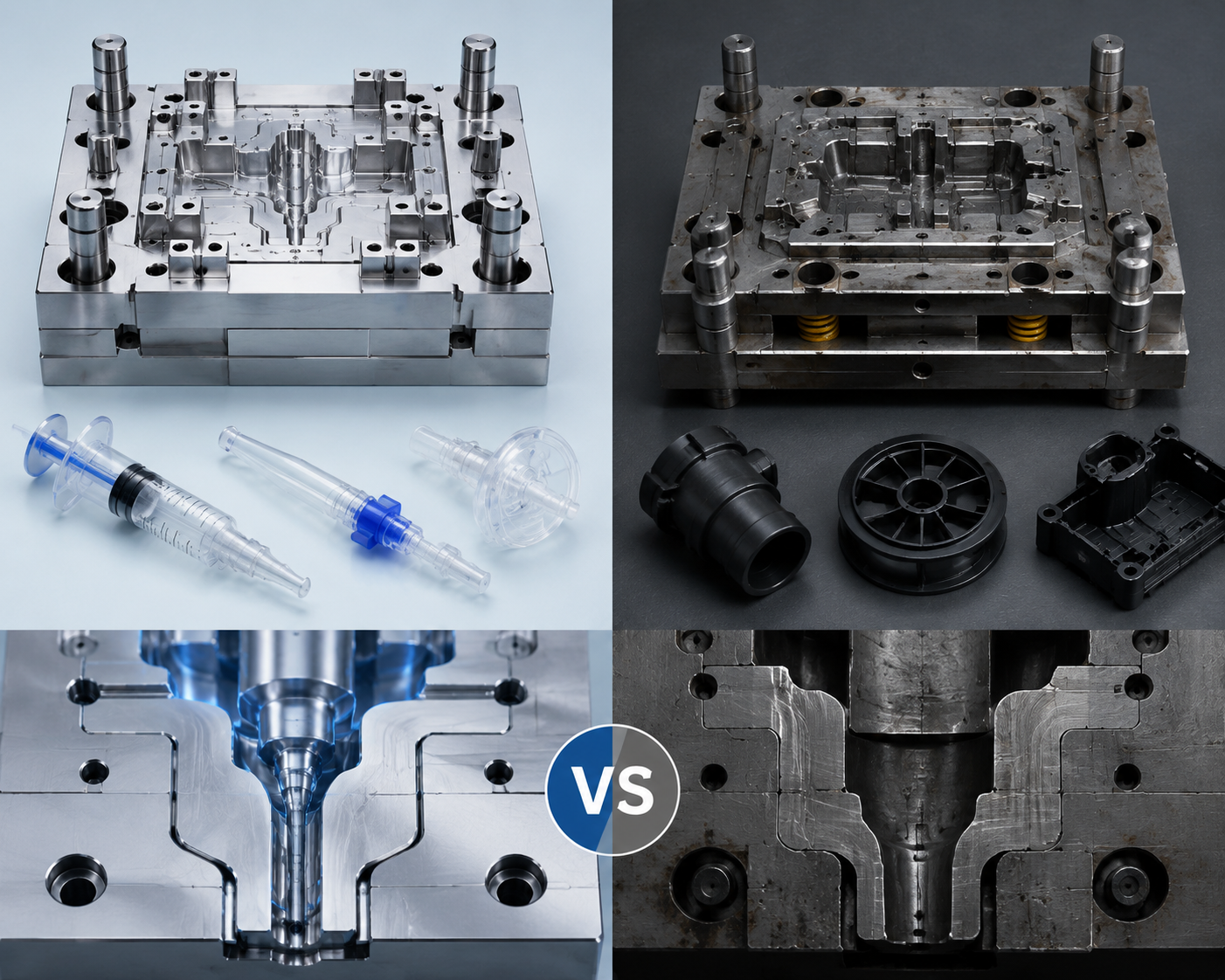 |
The harsh environment of medical manufacturing dictates the type of steel that can be used. Medical molds must withstand corrosive medical-grade plastics and constant sterilization processes.
Medical Device Molds: Typically utilize premium, high-corrosion-resistant steels like H13, S136, or 420 stainless steel, often heat-treated to a high Rockwell hardness (HRC 50-54+). This prevents rusting from cleanroom humidity and ensures the mold doesn't leach impurities into the medical parts.
Regular Industrial Molds: Frequently use standard carbon steels or pre-hardened steels like P20, NAK80, or 718. While durable, they lack the extreme corrosion resistance and longevity required for medical-grade production.
Where the mold operates changes how it must be designed.
Medical Device Molds: Operated within Class 10,000 (ISO 7) or Class 100,000 (ISO 8) cleanrooms. Because of this, the molds themselves must be "cleanroom compatible." They cannot use standard greases or lubricants that might atomize and contaminate the air or the parts. Instead, they utilize specialized food-grade or medical-grade lubricants, or advanced surface coatings (like DLC - Diamond-Like Carbon) to run completely dry.
Regular Industrial Molds: Operated in standard factory floor environments. Standard automated greasing systems and oil lubricants are perfectly acceptable, as microscopic airborne particles do not pose a threat to the final product (e.g., automotive trim, consumer electronics).
The acceptable margin of error for a medical device is practically zero.
| Feature | Medical Device Mold | Regular Industrial Mold |
| Tolerance Limits | Hyper-tight: often within ±0.005mm to ±0.01mm (or microns for microfluidics). | Standard: usually between ±0.05mm to ±0.1mm. |
| Flash & Defect Tolerance | Virtually zero. Parting line flash can harbor bacteria or injure a patient. | Minor flash or cosmetic blemishes are often acceptable if structural integrity is maintained. |
| Design Complexity | High. Often requires complex side-actions, micro-features, and thin-wall geometry. | Standard to high, but rarely constrained by micro-scale human safety factors. |
This is perhaps the biggest differentiator. A medical mold cannot simply be built and put into production; it must undergo a rigorous, legally mandated validation process.
Medical Device Molds: Must comply with strict regulatory frameworks like FDA Title 21 CFR and ISO 13485. Every medical mold must pass a strict IQ/OQ/PQ (Installation, Operational, and Performance Qualification) protocol.
Note: Once a medical mold process window is locked in during validation, it cannot be changed without re-validating the entire process.
Regular Industrial Molds: Usually follow standard PPAP (Production Part Approval Process) or simple First Article Inspection (FAI). If a technician needs to tweak the injection speed or temperature on the fly to fix a cosmetic issue, they can do so without a mountain of regulatory paperwork.
 EN
EN



 Hot News