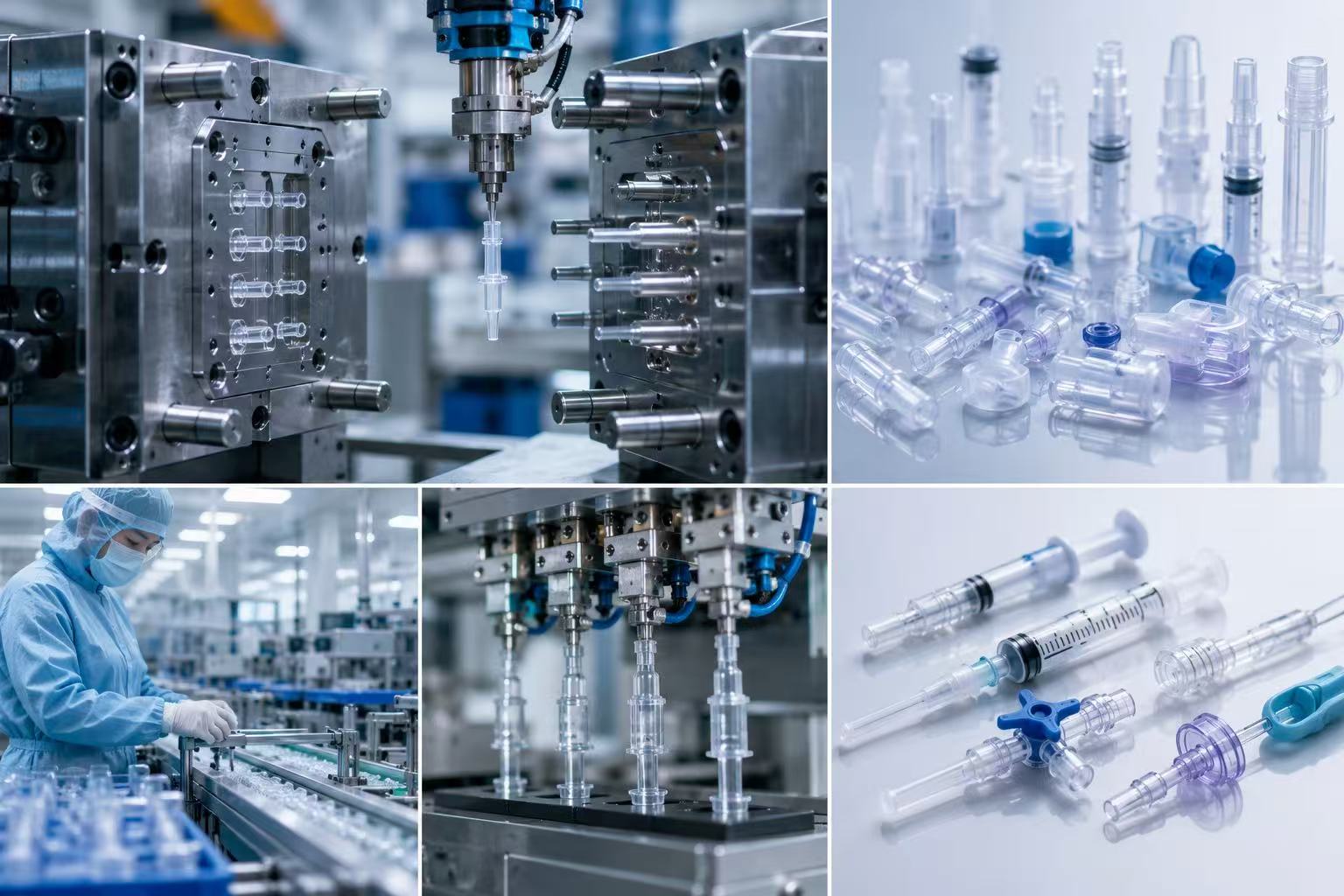
In the healthcare industry, manufacturing requires zero margin for error. From surgical instruments to diagnostic components, the tools doctors rely on must meet uncompromising standards. Achieving this level of perfection at scale requires specialized expertise in medical device molding, where advanced engineering meets strict regulatory compliance.
Let’s explore how high-quality medical molding and advanced injection tooling drive the production of next-generation healthcare components.
The foundation of any high-quality plastic moulded part lies in the engineering of the tool itself. Creating a robust plastic mould tooling setup is a highly technical process. For medical applications, tolerances are often measured in microns—vastly thinner than a human hair.
To guarantee consistency across production runs, manufacturers utilize a precision mold crafted from hardened steel. This ensures the tool can withstand the high pressures of the injection mold process without wearing down, delivering accurate molding results from the very first shot to the 10-millionth.
You cannot produce life-saving devices in a standard factory environment. Contamination from dust, oils, or airborne particulates can ruin a batch and compromise patient safety. Therefore, top-tier oem plastic manufacturing providers rely heavily on clean room molding.
In these controlled environments—often certified as ISO Class 7 or Class 8—the air filtration, temperature, and humidity are strictly regulated. Utilizing clean room plastic making protocols ensures that every plastic injection cycle occurs in a sterile atmosphere, preventing any bioburden or foreign matter from embedding into the medical component.
Choosing the right polymer is just as critical as the precision molding process itself. Healthcare molding demands materials that are bio-compatible, chemically resistant, and capable of enduring rigorous sterilization methods (such as autoclaving or gamma radiation).
Common resins used in this specialized injection moulding workflow include:
PEEK & Polycarbonate: Chosen for high structural strength and optical clarity in surgical devices.
Medical-Grade Polypropylene: Ideal for syringes, fluid channels, and diagnostic vials due to its excellent chemical resistance.
Experienced partners in oem medical products understand how different resins behave under heat and pressure, allowing them to optimize the plastic mold parameters for flawless execution.
Successfully executing medical device production with precision plastic injection mold technology requires a blend of state-of-the-art machinery, rigorous quality systems (like ISO 13485), and deep technical expertise.
When searching for an injection contractor, look for a partner who owns the entire workflow—from initial injection tooling design and plastic mold fabrication to final clean room molding production. Investing in top-tier engineering up front ensures faster regulatory approval, lower defect rates, and absolute product safety.
 EN
EN



 Hot News